New Thinking Is Revealing Why Lost Deals Aren't Really About Your Sales Skill At All
What If It Was Never About Your Close Rate?
Plus: why a simple $27 first step can make a real difference to who shows up on your calls, without new scripts, harder closers, or relying on another webinar.
WITHOUT more discovery calls, pushier follow up, or trying to "close harder" when the buyer has only known you for 45 minutes.

By Gregory Cooke | | Founder, Go Midnight
For a lot of experts, a low close rate feels like a personal flaw.
Not because they don't care.
Not because they don't know their stuff.
And not because they lack hustle.
In fact, most experts do just fine once someone is already a client.
They get great results for people.
They get referrals when things are going well.
They feel sharp and confident on delivery calls.
But then a stranger enters the picture. That's when things start to change.
Across hundreds of chats with coaches, consultants and agency owners, the same pattern keeps showing up:
✔ Calls that ghost after you paid $40 for the lead
✔ "I need to think about it" on every second call
✔ Feeling "bad at sales" only with cold leads
✔ Prospects who want the result but won't pay for it
✔ Wondering why your closer is great one week and useless the next
Different people.
Different niches.
Same experience.
And what's striking is this: These lost deals don't happen randomly.
They don't show up when the buyer already knows you.
They show up with strangers.
Not bad leads.
Not a weak pitch.
Strangers.
Which leads to a much more important realization:
If a stranger is nearly always on the other side of the lost deal, then your close rate may not be the root problem at all.
It may be the signal that you're asking for trust you haven't earned yet, before your pitch ever has a chance to land.
And once you start looking at your close rate through that lens, the entire story begins to change.
I Thought It Was A Close Rate Problem, Until I Looked Closer
For a long time, I was frustrated, not just with my sales team, but with how little the usual sales advice actually helped.
Everything I tried felt like a temporary fix.
More scripts.
More follow up.
More "just handle the objection" thinking.
It worked for a little while... until it didn't.
The pattern kept repeating.
I'd do fine when a client already knew me.
I'd close easily when people came from a referral.
And then cold leads would hit the calendar and everything would fall apart again.
It started to feel like I was constantly putting band-aids on my sales process.
So instead of hiring another closer or buying another script, I decided to stop and ask a harder question:
What's actually happening before those calls?
I started paying attention not just to what we said on calls, but to who the people on the calls were.
I noticed the deals we lost almost never came from people who knew us. They came from strangers.
From people who'd seen one ad. From people who'd never bought anything from us, not even a book.
That curiosity turned into a long, hard look.
I went back through years of my own call notes, no shows, lost deals and refunds.
I watched old call recordings, and I reread the "not right now" emails.
I tried to understand what a stranger actually feels when you ask for $10,000, not in a sales course, but in real life.
And eventually, something clicked.
The problem wasn't my close rate.
The close rate was the end of the process, not the beginning.
What really mattered was what the buyer felt about me before the call even started.
That realization was shocking and honestly, a little unsettling.
Because it meant this wasn't about being "bad" at sales.
It wasn't about scripts.
And it definitely wasn't about my closers.
It was about a human response most business owners are never taught to recognize.
And once I saw that clearly, there was no unseeing it.
The Shocking Truth: Your Close Rate Isn't The Root Problem
Here's the part most people never hear and once you understand it, lost deals stop feeling mysterious.
Lost deals don't come from a lack of sales skill.
They don't come from "bad leads."
And they don't come from price alone.
Do you know what buyers NEED before any big decision?
✔ see you deliver first
✔ try you before they trust you
That's the part of the buyer that says:
"I don't really know this person."
"I'll feel better once I've tried them."
"I'm not ready to spend that yet."
But a stranger changes the rules.
When a stranger asks for a big decision, whether it's $3,000, $10,000 or $25,000, the buyer's brain shifts out of open, curious mode and into something much faster and more defensive.
In simple terms:
A stranger pushes the buyer from buying mode into protection mode.
And when that happens, a few important things change:
✔ The buyer looks for reasons to say no
✔ They put safety ahead of results
✔ They pick "I'll think about it" over a decision
That's why deals go cold so fast.
That's why objections don't feel logical.
That's why it feels like they "just ghosted."
Cold ads, cold calls, and cold DMs all have one thing in common:
- They ask a stranger for trust before giving them any reason to give it.
- Strangers don't ask what you can do for them.
- They ask what happened the last time they trusted someone online.
And whatever that answer is; a course they never finished, a coach who vanished, an agency that burned their money; becomes the default response.
This is where most business owners get confused.
They think the pitch lost the deal.
But in reality, the lost deal is just the last step in a chain reaction that started earlier, with a stranger.
By the time the call starts, the buyer has already put their guard up.
Which explains something many experts quietly notice but rarely connect:
You don't struggle with clients who know you.
You struggle when a stranger shows up on the call.
And once that guard is up, a better script is rarely enough to bring it back down.
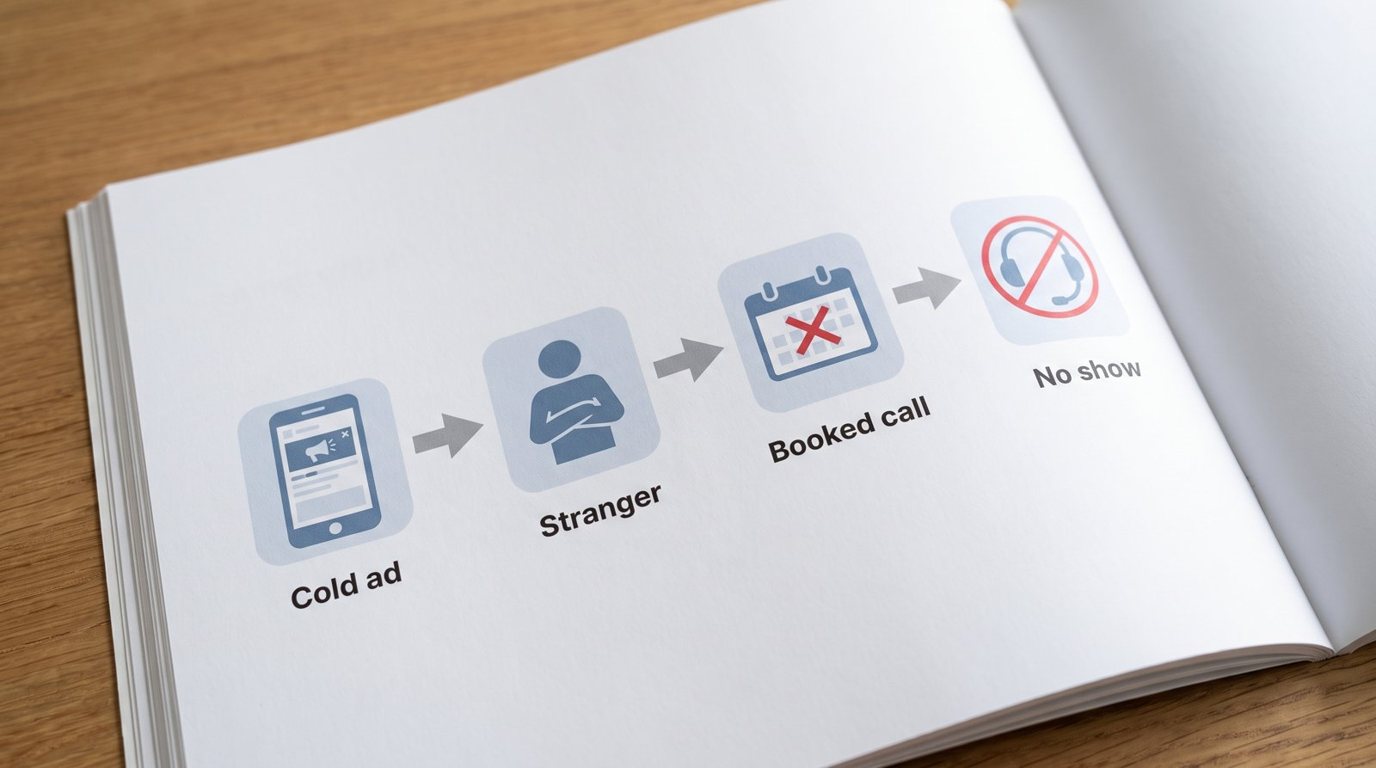
What A Stranger Actually Does On A Sales Call
The first thing most experts notice on a cold call isn't interest. It's tension.
The buyer feels tighter.
Answers get shorter.
Everything feels harder than it should.
That's because a big price from a stranger doesn't just hit the budget; it changes how the buyer decides.
When the ask gets bigger, the buyer's ability to listen, picture the result, and believe what you say starts to shrink.
Questions get narrower.
Objections get louder.
And "I'll think about it" takes over.
Think of it like proposing on a first date.
When two people know each other, things flow freely.
There's history, warmth, trust.
But the moment you ask for too much too soon, the whole thing goes stiff.
The same thing happens on a sales call with a stranger.
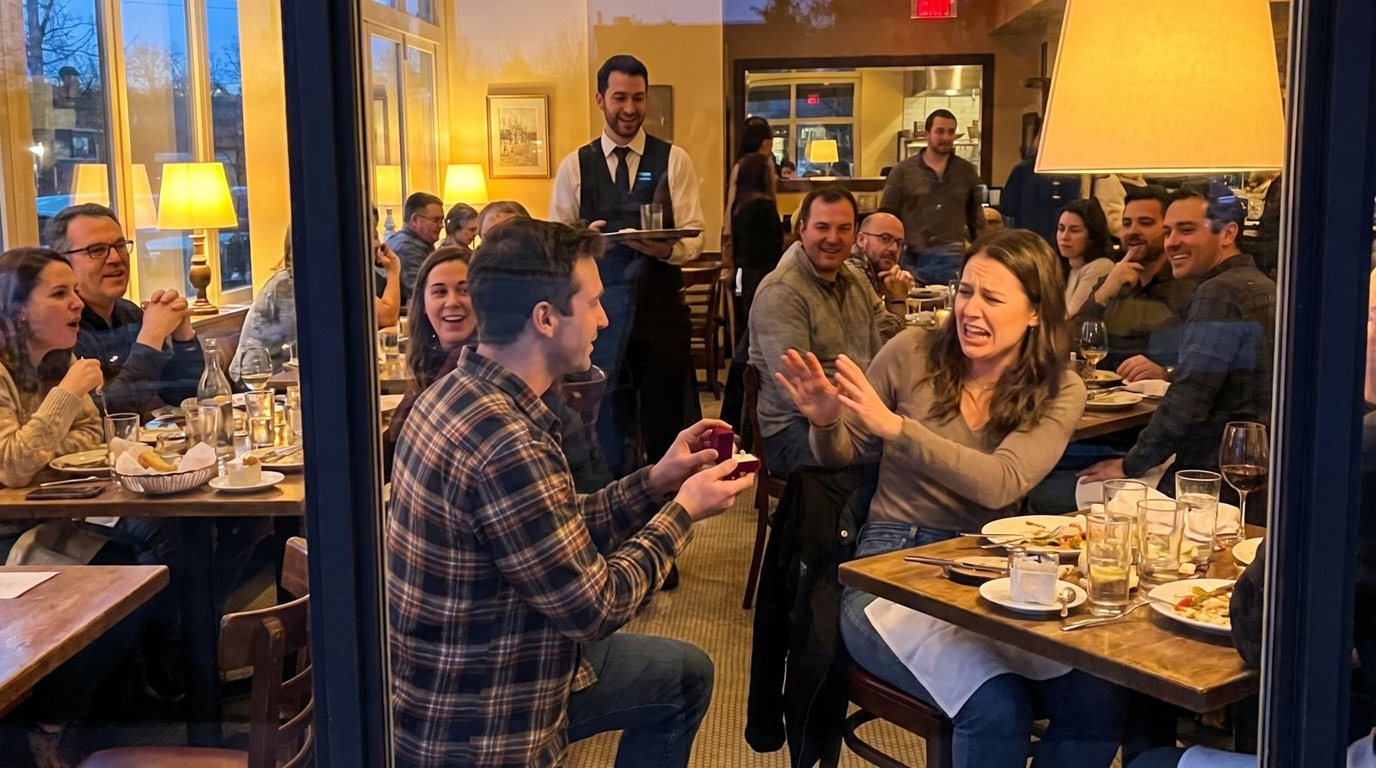
A big ask from a stranger acts like pressure on the buyer cutting off the trust they need to decide about:
- Your price
- Your promise
- Their own ability to get the result
When that trust is missing, the buyer can't reach the part of them that wants to say "yes."
Instead, they default to whatever feels safest and carries no risk at all.
That's when objections feel louder.
That's when "no" feels automatic.
That's when it feels like the deal just disappears.
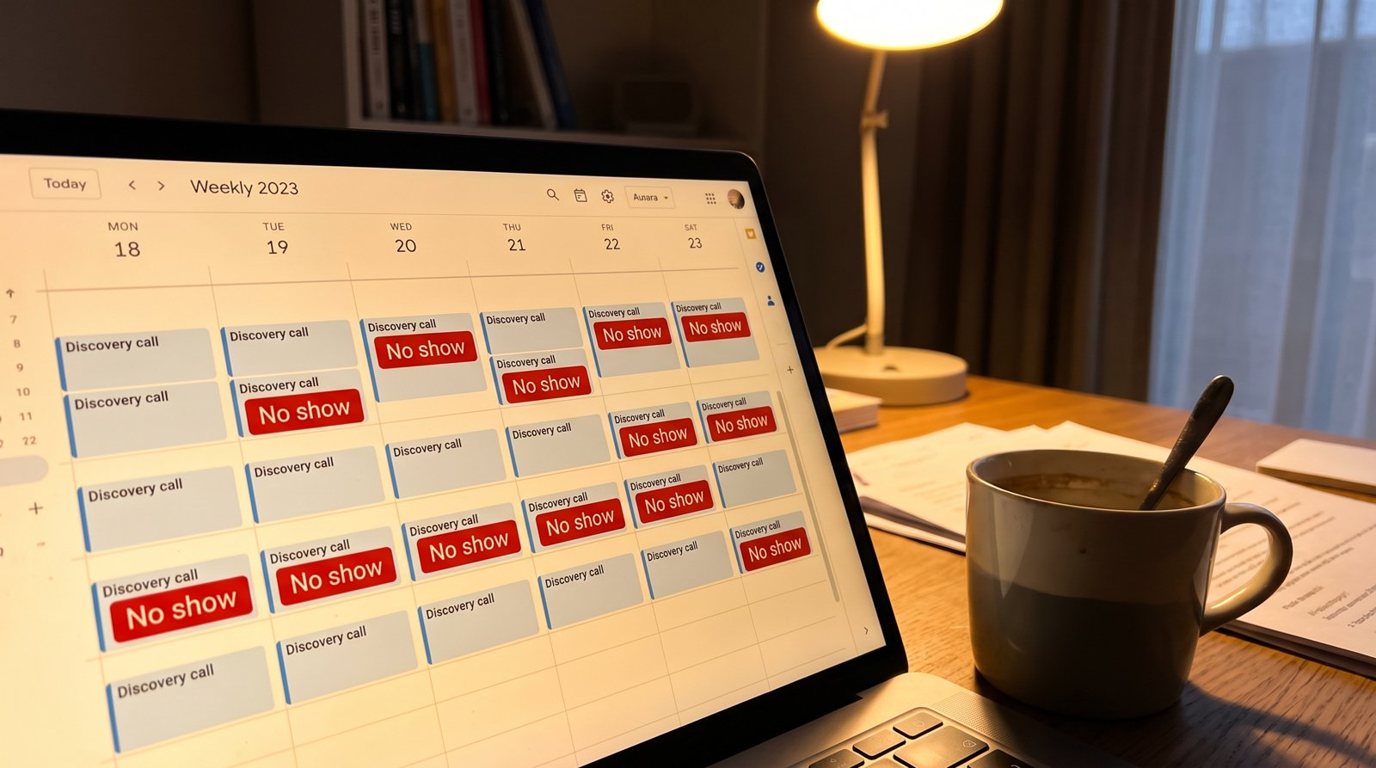
And here's the key part most people miss:
This isn't happening because of your leads.
It isn't happening because of your close rate.
It's happening because a cold call creates stranger pressure, a state where the buyer is guarded and defensive.
In that state, the buyer isn't broken.
They're doing exactly what any sensible person would do:
Protect their money and say no.
This explains why, no matter the channel, webinars, VSL to call funnels, cold DMs, or setters and closers, the outcome often looks the same.
The guard goes up.
The trust disappears.
And the "no" runs.
That's the real root mechanism behind lost deals.
Not a lack of skill.
Not weakness.
A stranger being asked for too much before they've been given anything.
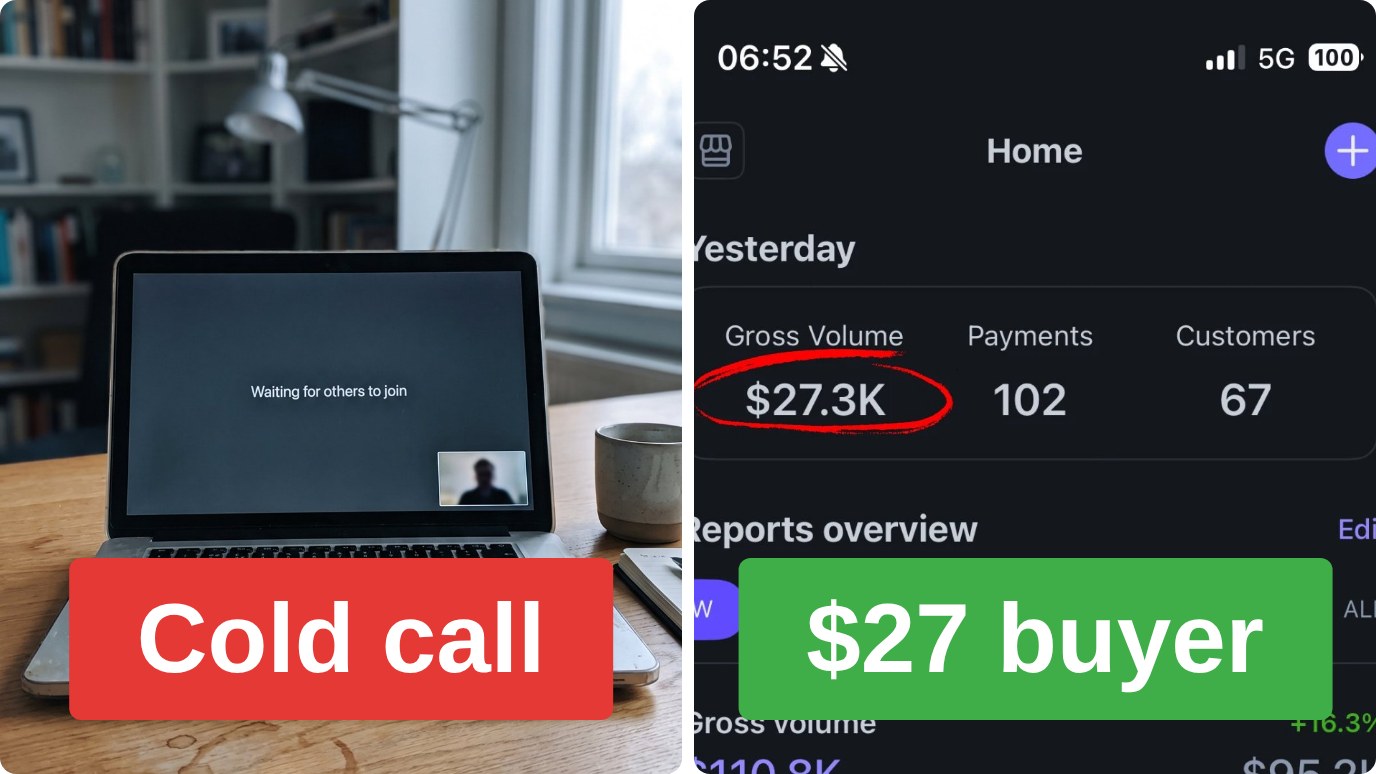
Now Here's The Real Problem...
When Stranger Pressure Isn't Fixed At The Front Door, The No Show Loop Only Gets Stronger.
As you can imagine, when strangers fill your calendar, the costs add up fast.
When cold leads stay the norm:
- Show rates drop
- Close rates shrink
- Cost per lead starts running the show
And without a fix at the front door, those problems don't fade, they compound.
Each time a stranger ghosts, your business learns something important.
"Spend more, book more, and hope more of them show."
That's why no shows don't just repeat, they often get more expensive over time.
It's not because your sales skills are getting worse.
It's because the stranger problem is being paid for again and again.
Most sales fixes don't stop this cycle, they accidentally allow it to continue.
New scripts help when the buyer already trusts you, but strangers don't follow scripts.
Better closers take time to train, time a cold lead won't give you.
Longer webinars assume attention is there, strangers won't give it.
So all that's left on the call is:
- A guarded buyer
- A big price
- And a "no" that already knows what to say
Over time, this creates a frustrating pattern.
Not only do the no shows keep coming...
But confidence starts to erode, too.
Business owners begin to feel:
- Burnt out
- Frustrated
- Confused about why "nothing works"
And the worst part?
They often blame themselves or their team, when the real issue was never addressed in the first place.
Because when strangers keep filling the calendar, and nothing builds trust first, the business stays stuck in chase mode.
That's not a lack of effort.
That's a mismatch between how buyers decide and how most sales processes are designed.
So What's The Real Solution?
Here's the part that most people, and most sales advice, completely miss.
Trust doesn't appear on a call.
It doesn't come from a slide deck.
It doesn't come from a clever close.
It's earned in steps.
That means the real issue isn't just what you say, it's what the buyer has done before you say it.
Most Approaches Try To Win The Call.
"Fix your script."
"Handle the objection."
"Just follow up more."
But a stranger doesn't work that way.
When a stranger is asked for $10,000, the guard goes up instantly.
Curiosity shuts down.
Protection takes over.
And by then, it's already too late for anything that happens on the call.
That's the order problem.
If your sale needs:
- A booked call
- A show up
- A setter chasing
- A closer pushing
...it's already asking a stranger for too much, too soon.
This is why so many popular sales fixes quietly fail.
They're not wrong in theory, they're just in the wrong order.
Business owners often blame themselves for this.
But the truth is, most sales processes were never designed for real buyers who have never met you:
- Saw one ad
- Got burned before
- Busy and skeptical
- Hate being sold to
They assume the buyer already trusts you enough to listen, exactly when a stranger has been given no reason to.
And that creates a frustrating loop.
You buy more leads.
You rewrite the script.
You hire another closer.
Until the next cold call goes quiet.
Not because you aren't good at what you do.
Not because the buyer wasn't interested.
But because nothing came first to turn the stranger into a customer.
That's the part that changes everything.
Because once you understand that trust comes before the big sale, you stop looking for better ways to pitch strangers...
...and start asking a much more practical question:
What could a stranger say yes to right now?

Most sales training sounds great on paper.
It promises more calls.
It promises better closes.
It promises results, eventually.
But here's the problem no one really talks about:
It's built for buyers who already trust you, not for the stranger who saw one ad yesterday.
When you ask a stranger for a big decision, $5K, $10K, $25K, it has to pass their trust filter first. And that filter has priorities.
The buyer has to weigh what this money is up against:
- Their mortgage and their family
- Every course they never finished
- The last coach who let them down
In a cold sales call, the buyer isn't focused on your brilliant framework.
They're focused on not getting burned again.
So even a great offer will often get delayed, discounted, or ghosted, especially when the price is already four or five figures.
That's why so many experts feel disappointed.
They didn't build the wrong offer.
They chose the wrong first step for a stranger.
This is why "just get them on a call" rarely works for cold traffic.
Because big decisions don't happen when the buyer feels unsure and exposed.
They happen when the buyer already feels safe.
Asking for $10,000 before a stranger has seen you deliver anything is like proposing before the first coffee.
That's where the $27 front door changes the equation.
By selling a small slice of what you already know first, trust gets earned before the big ask, from a buyer who has already paid you.
Not pushier.
Not louder.
Just in the right order.
And that difference matters.
Because when strangers are filling your calendar, the first step isn't a luxury.
It's the difference between chasing a stranger onto a call...
and talking to a customer who already said yes. That's why the first step isn't a detail.
It's the foundation.
After Looking At My Numbers, One Thing Became Clear: The Pieces Matter But Only When Used In The Right Order
Most experts don't have unlimited time.
Between client delivery, sales calls, content, and everything else the business throws at you, it's hard enough just keeping up, let alone building complicated funnels or hiring a big team.
And when something does promise help, the natural question becomes:
"What's actually in this, and why?"
That's where the build matters. Not flashy funnels.
Not huge ad budgets.
And not tactics chosen just to sound impressive.
The focus here is much simpler.
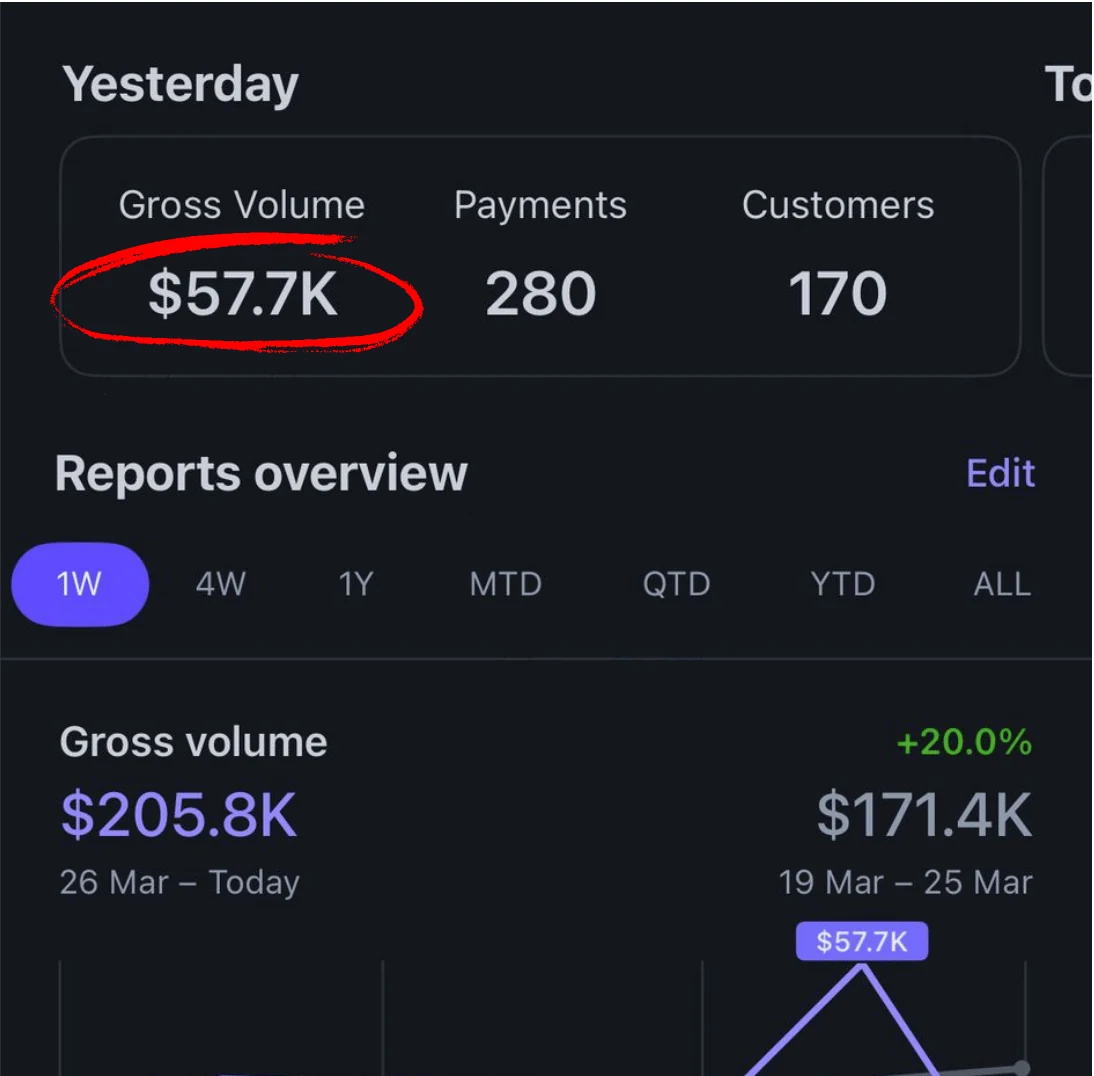
After going back through 22,000+ sales on my own products, my attention kept coming back to three small pieces, not because they force anyone to buy, but because they turn a stranger into a customer before the big ask. Here's what that looks like.
The $27 Product (a slice of what you already sell)
One small, useful piece of your expertise, priced at $27. Not a pitch in disguise, a real quick win. It gives a stranger a low risk way to say yes, and a reason to trust you that no call can fake.
Order Bumps And Upsells (2 bumps, 3 one click upsells)
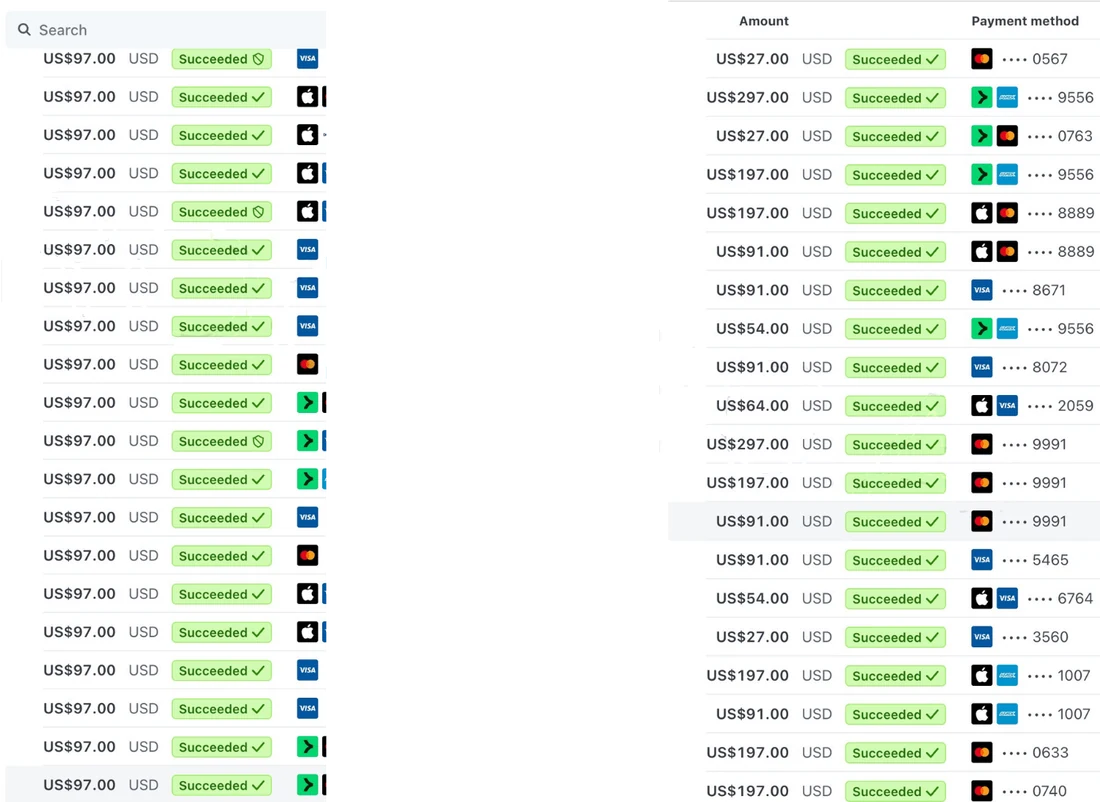
Two tick boxes on the checkout and three one click offers straight after. On our funnel the average order ends up around $180 per buyer (our number, not a promise). That's what pays for the ads, so the front end funds itself instead of costing you $40 a lead.
The Walk Up (daily email, WhatsApp and an AI sales rep)
A quiet, background system that walks buyers toward your $10K, $15K or $25K offer. It doesn't chase or pressure. Daily email, WhatsApp sequences and an AI sales rep do the follow up a sales team used to do.
None of these pieces is extreme.
None are there to pressure the buyer.
And none are meant to "hard close" anyone.
They're chosen to build trust, especially at the moment when a big price would normally push a stranger into protection mode.
Because the goal isn't pressure.
It's a yes.
A small first purchase.
A real quick result.
A little more trust between the ad and the big decision.
And that's what makes the numbers behind all of this so important, because this isn't just theory.
What 22,000+ Sales Reveal About Strangers, Trust, And Timing
Once I started tracking every buyer from the first click to the high ticket sale, a few patterns kept showing up across my funnels, my clients' funnels, and outside research.
Instead of blaming close rates, the focus shifted to what a stranger needs before a big decision.
Here's what that data highlights.
🧠 Insight #1 - Buyers Would Rather Skip The Sales Rep
Gartner's 2023 research found 75% of B2B buyers prefer a buying experience with no sales rep at all.
This is why cold calls often feel like a fight, not like a conversation.
By the time a stranger books, part of them is already in "get me off this call" mode.
Put simply, buyers want to decide for themselves, and a pushy call works against that when the price is high.
⚡ Insight #2 - A Small Yes Pays For The Ads
A $27 sale doesn't just bring in $27, it changes what a buyer is worth to you.
On our funnel, 2 order bumps and 3 upsells take the average order to around $180 per buyer, on ads that cost about $45 per buyer. That's why the front end can pay for itself before the high ticket sale even happens. Our numbers, example only.

⏱ Insight #3 - Timing Beats Talent
My own funnels consistently show that the high ticket sale comes after a buyer has paid you and had a quick win.
Advice like "get them on a call fast" or "just follow up harder" fails because strangers decide slowly, often over days of emails, not one call.
Our base line is around 3% of $27 buyers going on to high ticket, in time.
👁 Insight #4 - The Checkout Link Matters
At Go Midnight, our own $10K, $15K and $25K offers are sold from a checkout link with no sales call.
Because the buyer already knows us, it shrinks the gap between interest and purchase, bringing the sale closer to when they're actually ready.
This isn't about pressure, it's about removing friction.
Once strangers, trust, and order finally clicked, one thing became clear:
The problem wasn't effort.
It wasn't my closers.
And it definitely wasn't my close rate.
The problem was that nothing was designed to turn a stranger into a customer first.
That's where Go Midnight, the $27 front door comes in.
Not as a sales script.
Not as another webinar and not as something you set up once and hope strangers turn into $10K clients on their own.
Go Midnight was designed specifically for experts who sell big decisions, the people who are tired of pitching strangers on calls.
It shows you how to turn a slice of what you already sell into a $27 product, the first thing a stranger buys, not a pitch and not a freebie.
Because it only costs $27:
- It doesn't need a sales call
- It doesn't need a setter
- It's designed to be bought in real time
The goal isn't to "replace" your high ticket offer. It's much simpler and more realistic.
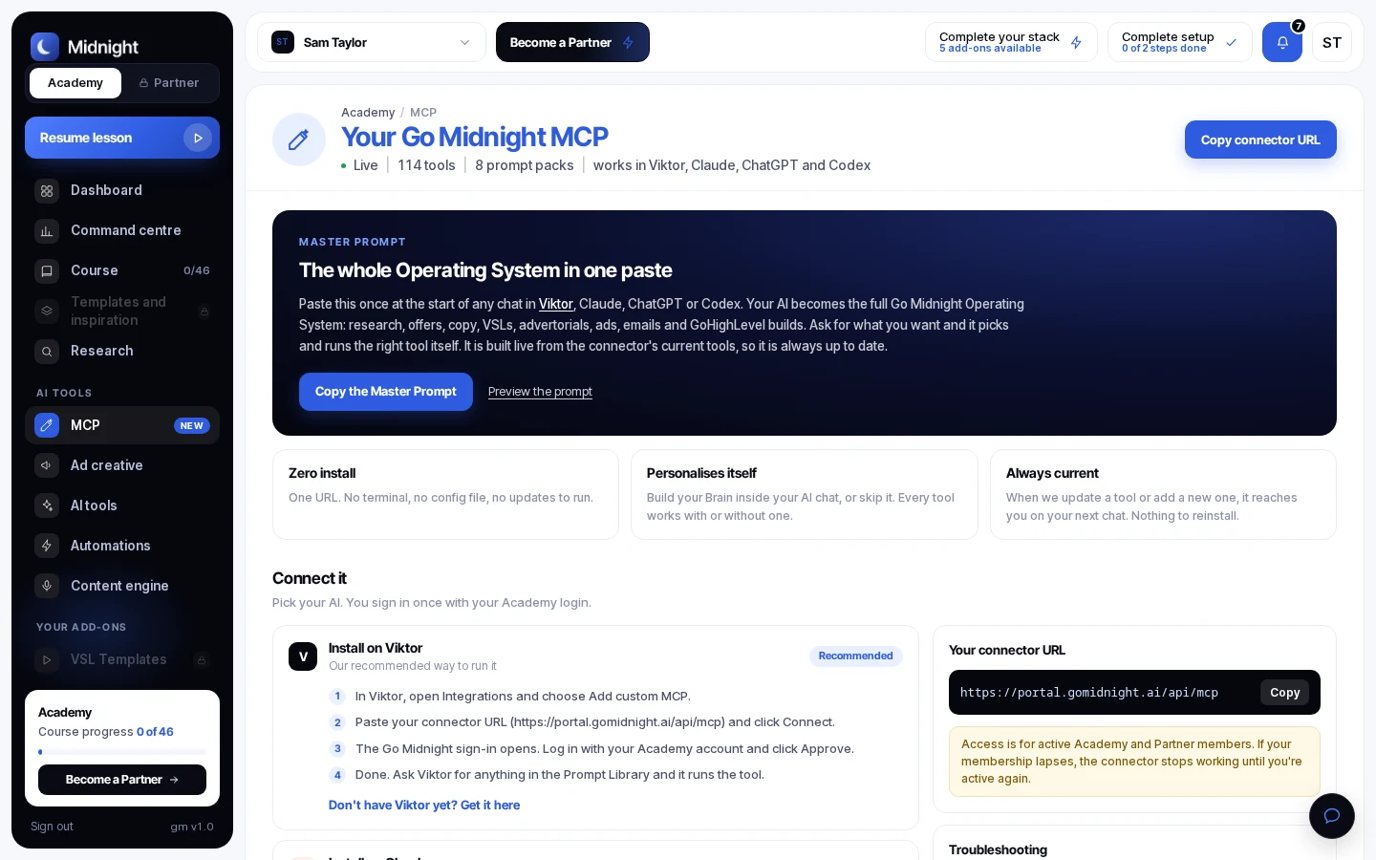
Go Midnight is designed to build trust before the big ask, with 30+ AI employees doing the research, copy, ads, emails and follow up.
To turn a stranger into a buyer, even a $27 one, before the $10,000 decision.
That first yes is everything.
It's the difference between chasing a stranger and serving a customer...
No more cold discovery calls.
No scripts to remember when you're already tired.
Just a simple front door a buyer can walk through any time it suits them, without you on the phone.
For the first time, the sales process actually matches how people buy. Not scripts, not closers.
Order.
Try It For The Sales That Matter Most
By now, one thing should feel clear, this isn't about fixing you.
It's about selling the way buyers want to buy when a big decision is on the table.
Go Midnight was created for real businesses, not perfect launches, not viral content, but the moments when:
- Your calendar is full of strangers
- Show rates keep dropping
- Cost per lead climbs before you even notice
That's why Go Midnight makes it simple to try for $27 one time, normally $297, with no long contract.
You can use it on the offers you already sell, coaching, consulting, and done for you services, and see how it feels to have buyers arrive already sold.
And if you don't see:
- A clear $27 front door for your offer
- A way to walk buyers up to high ticket
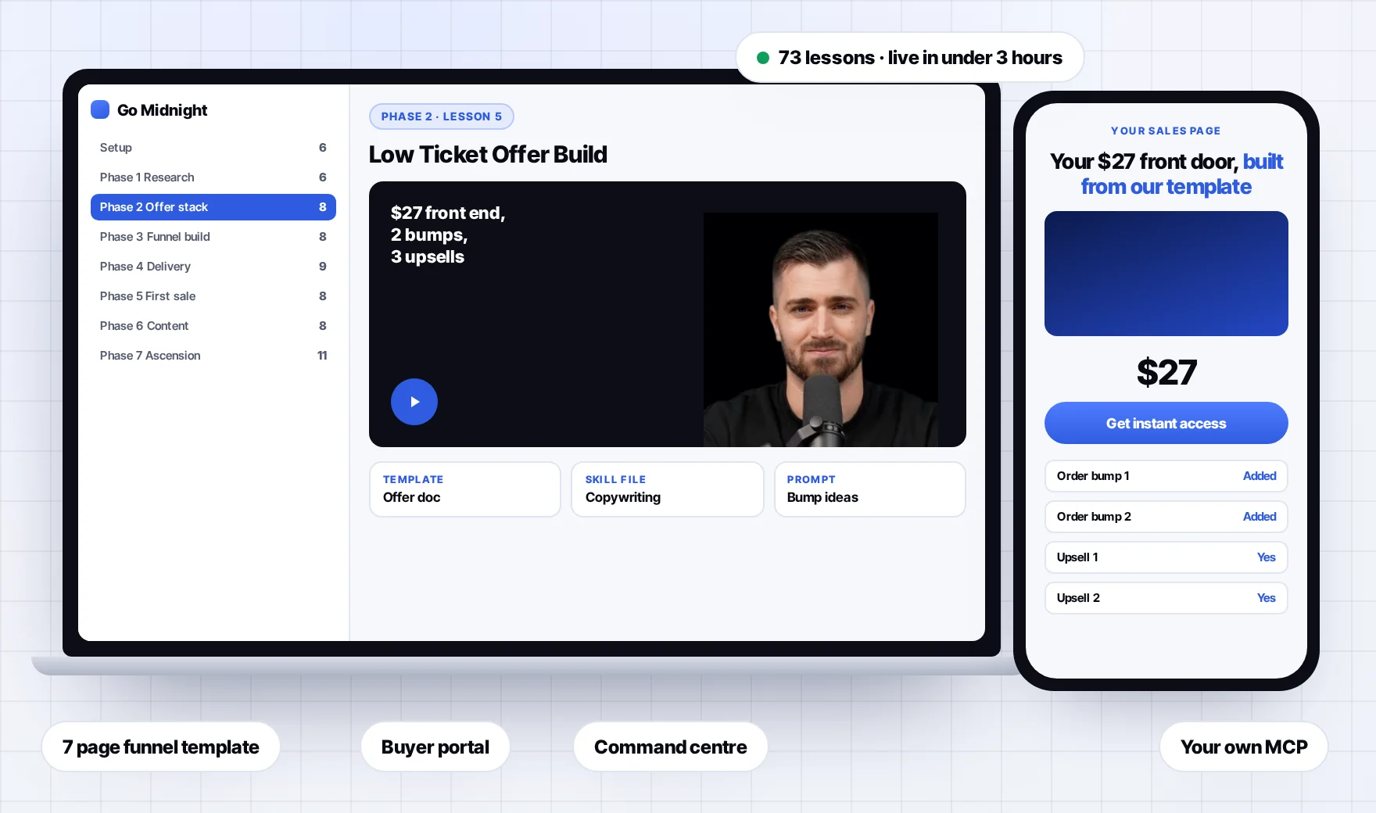
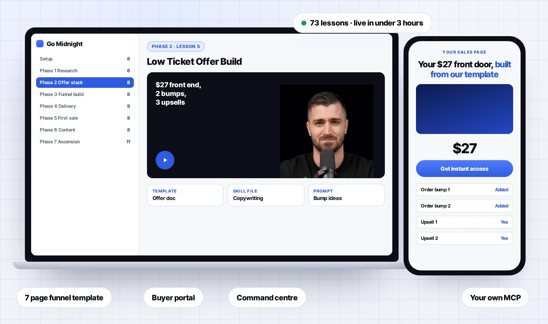
- Or real value in the 73 lessons and 30+ AI employees
Go Midnight stands behind it with a 180-day money-back guarantee.
No guilt.
No hoops to jump through.
No fine print designed to trap you. Because the goal isn't a quick sale.
It's giving you a practical front door for the sales that matter most.
If your close rate has been running the story...
and strangers have been quietly pulling the strings...
This is your chance to try something built for the real cause, not the blame.
Go Midnight has 22,000+ sales behind it, and only 0.6% of buyers asked for a refund.
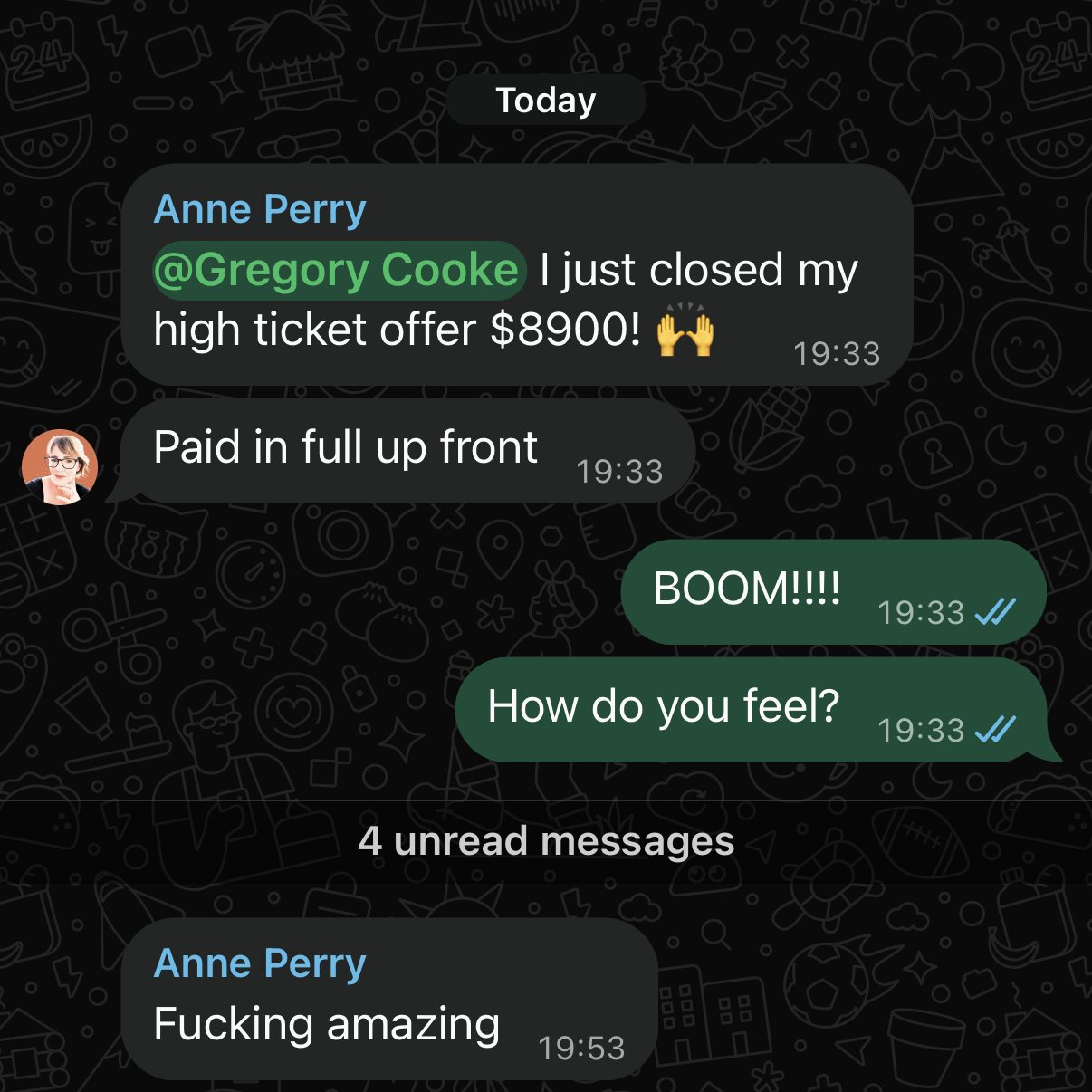
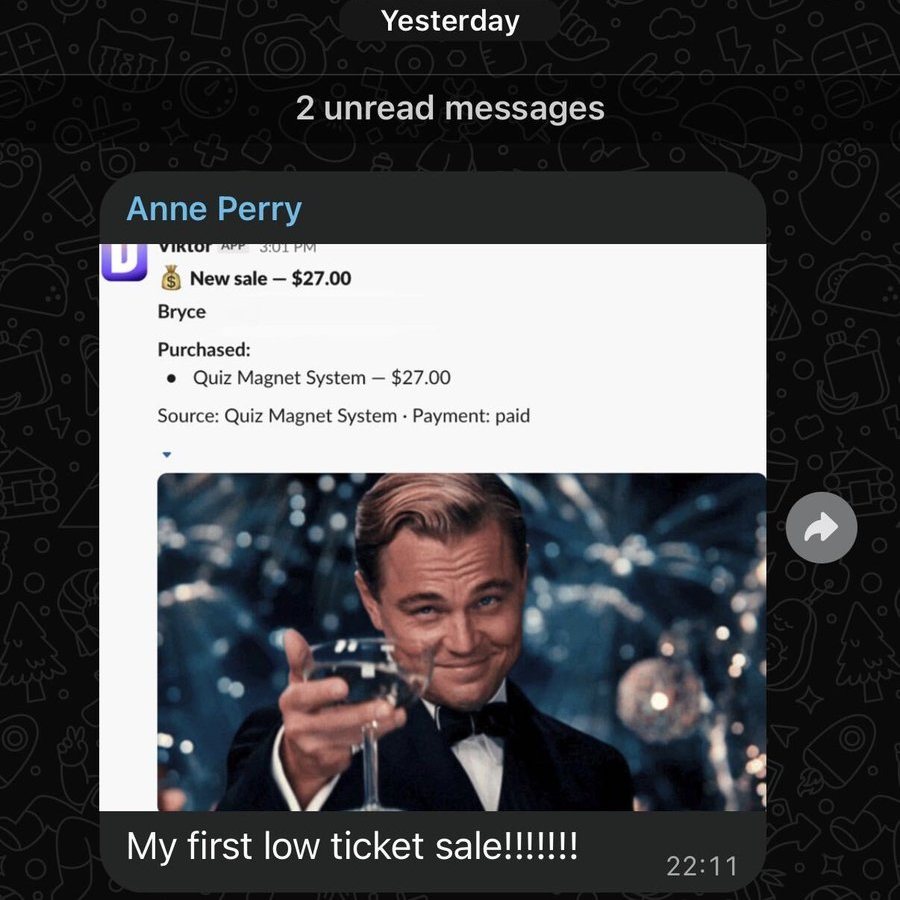
Anne Perry, business coach ★★★★★
"My first low ticket sale!!!!!!!" Then later: "I just closed my high ticket offer $8900! Paid in full up front." And: "It's also an opportunity that will lead to a lot more referrals and potential collaborations."
Dar Holdsworth ★★★★★
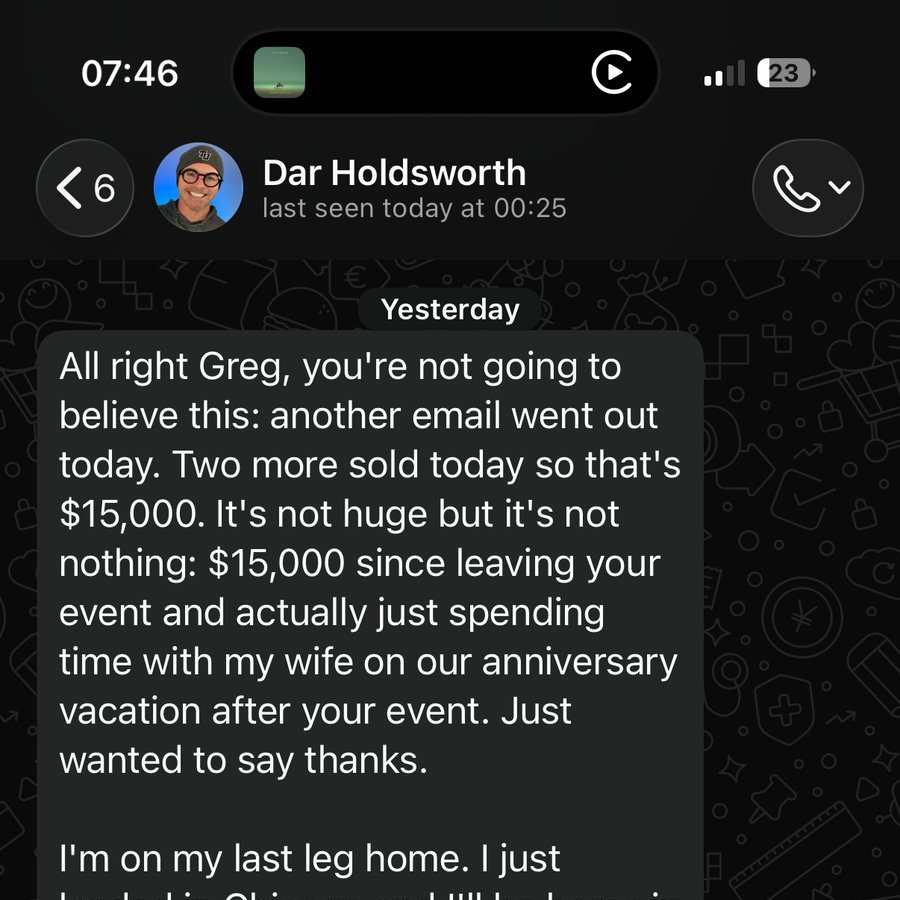
"another email went out today. Two more sold today so that's $15,000. It's not huge but it's not nothing" (A high ticket sale from an email, with no call.)
Nathan ★★★★★
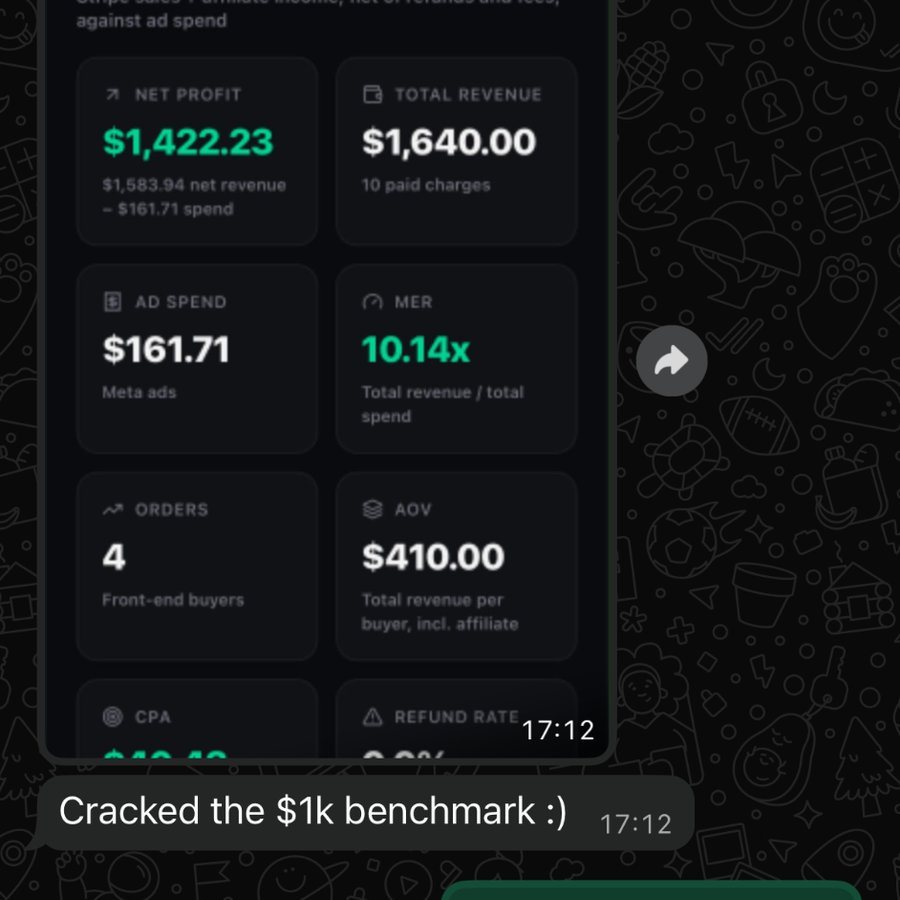
Shared his profit scoreboard for the day: $1,422.23 net profit. His words: "Cracked the $1k benchmark :)"
Jonathan Bertie ★★★★★
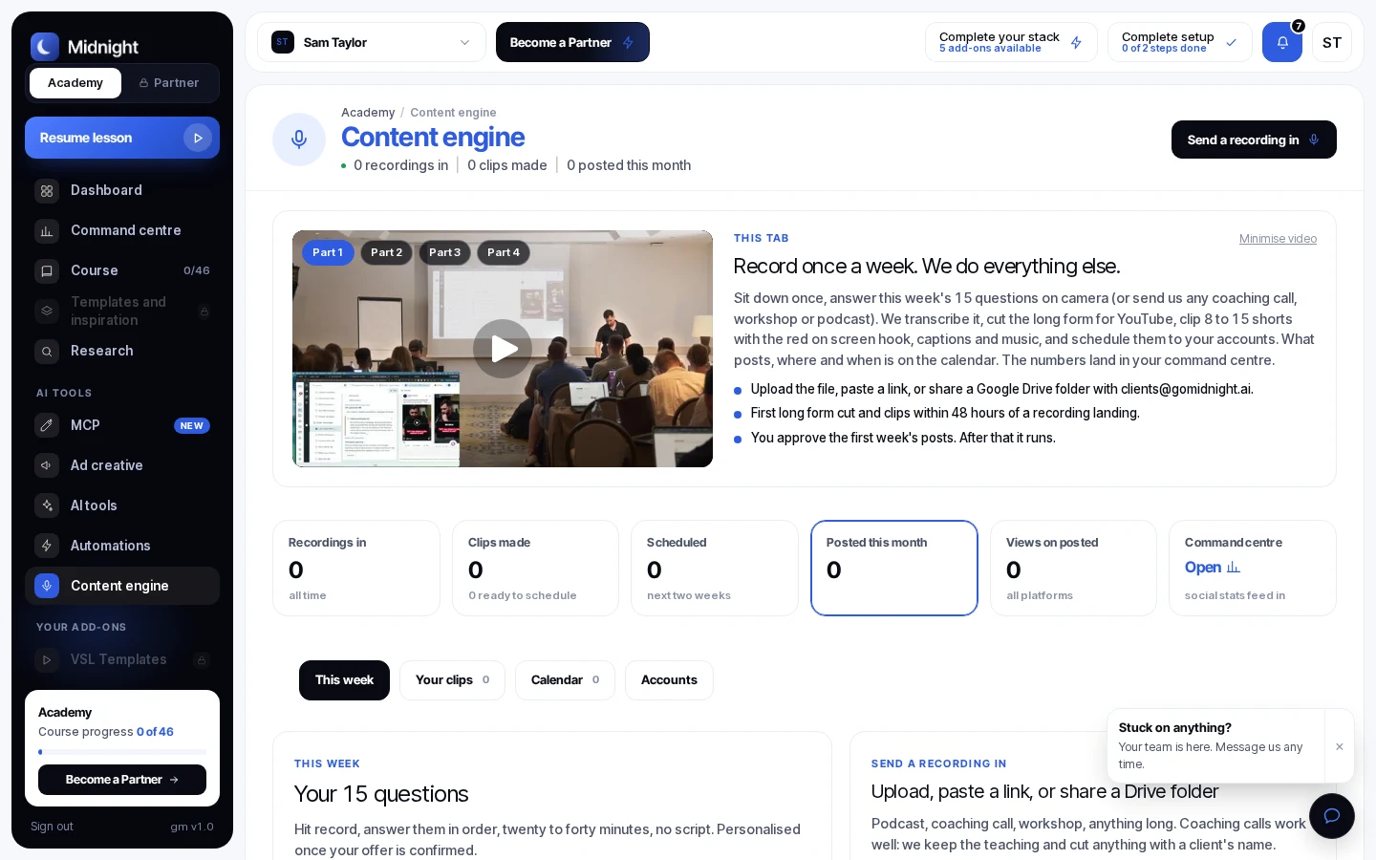
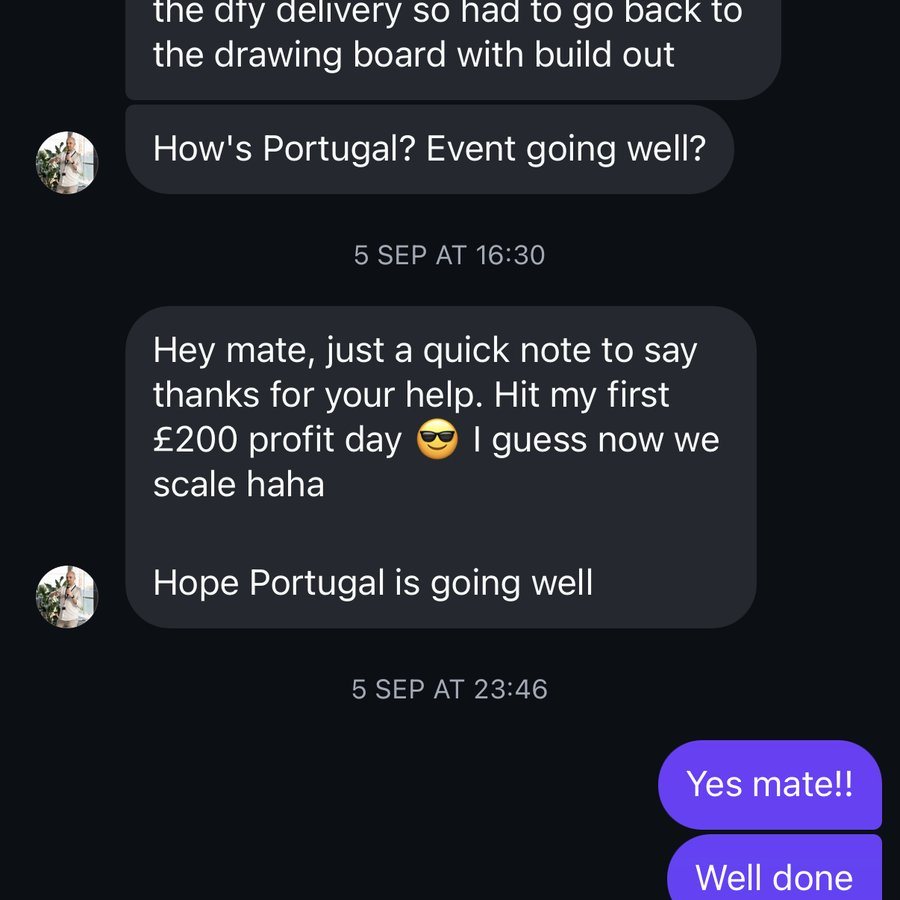
"Took me 2 days to get setup. Just said to myself stop dithering and get live. 3 videos posted in 24 hours and first $200 in sales and 7 sales mainly from one video!"
Lewis Burchard ★★★★★
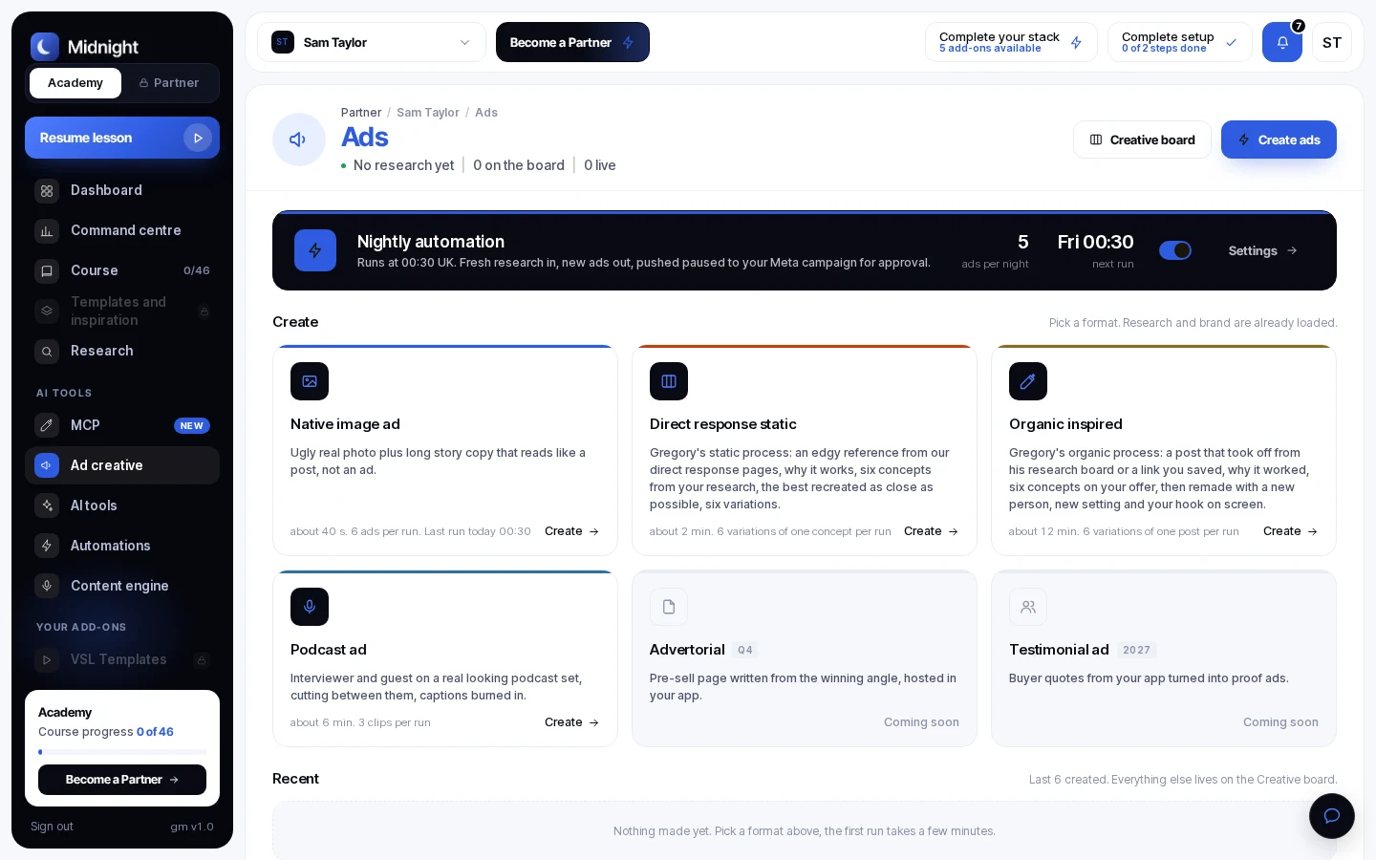
"Thank you for the fully transparent way man. At 2.2 ROAS first day, 1 of my organic videos popped off to 121K in views and retargeted them with the ads method you showed which is killer!"

This Simple Front Door Has Helped Experts Sell Big Offers Without Chasing Strangers
Just Imagine...
✔ Not chasing no shows after a long day of calls
✔ Talking to buyers who already paid you before the big ask
✔ Staying calm when a lead says "let me think about it"
Go Midnight is designed to be used on what you already sell, turning a slice of your expertise into a $27 product.
Simply follow the 73 short screen share lessons and let the 30+ AI employees do the heavy lifting.
There's no webinar to run.
No setter to manage.
No closer to chase.
Because the $27 product sells from a page, it doesn't rely on calls and doesn't need you on the phone all day.
You can use Go Midnight:
- For coaching and consulting offers
- For agency and done for you services
- For courses, masterminds and memberships
- Anywhere you sell expert advice at $3K to $25K
There's no strict schedule and no complicated tech. Done for you templates cover the sales page, checkout, upsells and buyer portal.
Plus a 20 minute 1-1 onboarding Zoom with a human, and 1-1 support 24/7.
The goal isn't to "replace" your sales team or fire your closer.
It's to build trust first and create a small first yes, enough for a stranger to become a customer before the big decision.
Go Midnight fits alongside your existing offer, not against it. Every sale lands in your own Stripe or Whop, 100% yours.
As with anything new, it takes work to set up, and the numbers build over time as you learn your cost per buyer, take rates and ascension rate.
This isn't passive and it isn't a magic money button. It's a practical front door for how people buy.
This Front Door Was Built By Someone Who Spent Years On The Phone
My team at Go Midnight built the $27 front door with one clear goal:
To help experts sell big offers without pressuring strangers, rushing them, or making big promises.
That's why Go Midnight isn't sold as a "magic money button" or a quick fix.
It's offered as a practical, step by step system and we want you to feel confident trying it for yourself.
If you decide Go Midnight isn't right for you, if you don't see a clear way to sell your offer through a $27 front door, Go Midnight stands behind it with a 180-day money-back guarantee.
No guilt.
No complicated process.
No pressure to "make it work."
Just an honest chance to see how it feels to sell when buyers already trust you.
What sets Go Midnight apart isn't hype or scarcity, it's 22,000+ sales and a 0.6% refund rate.
Clear lessons.
Real templates.
Real humans on support. Because the goal isn't to push a purchase.
It's to give you a front door that fits your business, and let you decide if it helps.
If your close rate has felt confusing...
If strangers have quietly been driving the no shows...
This is a chance to try something built around how people buy, not blame.
What Happens Next Is Completely Up To You
There's no rush here & definitely no pressure.
Go Midnight isn't something you'll find on marketplaces or course sites. It's available directly through gomidnight.ai, so the experience stays simple, transparent, and consistent.
No knockoffs.
No resold copies.
No guessing what's actually inside.
More importantly, there's no scare tactic attached to this decision.
You don't need to believe your business will "fall apart" if you don't act today.
You don't need to fear missing out.
And you don't need to be pushed into a choice.
This is simply about deciding whether you want to try a front door designed for big decisions, the kind strangers usually say no to on a call.
Some experts decide to try Go Midnight because:
- No shows and cold leads feel confusing
- Better scripts haven't fixed their close rate
- They want buyers, not more booked calls
Others decide to keep doing what they're doing and that's okay too.
There's no "right" answer here.
If you do decide to try Go Midnight, you'll be doing so knowing:
- Exactly what it's designed for
- Exactly how it's meant to be used
- And that it comes with a 180-day money-back guarantee
No pressure to commit.
No pressure to keep using it if it doesn't feel right for you.
Just a chance to see what changes when strangers become customers before the big ask.
If that idea resonates, you can explore Go Midnight below and decide for yourself.
And if now isn't the right time, that's okay too.
This isn't about urgency.
It's about understanding, and choice.
A Final Thought Before You Decide
If there's one thing worth remembering, it's this:
Losing deals to strangers doesn't mean something is wrong with you.
It means you've been asking for trust the way most of the internet taught us to sell.
The goal was never a perfect script.
It was never pressure.
And it was never about fighting your buyers.
Sometimes, all it takes is a small first yes at the right moment, a moment where a stranger usually says no, to change how the rest of the sale unfolds.
Whether you decide to try Go Midnight or not, understanding what's really driving your close rate can be a powerful shift on its own.
And if you do choose to try it, you'll be doing so with your eyes open, not pressure, not fear, and not false promises.
This is just a front door for real buyers.
When they matter most.
Recommended:
Trusted by 22,000+ buyers
Go Midnight: The $27 Front Door
- Built for high ticket experts
- 30+ AI employees inside
- No sales calls needed
- 180-day money-back guarantee
Comments
Wilma D.
Does this actually work for consulting, or is it just for info products?

Gregory Cooke
Good question Wilma. It's built for consultants, coaches and agencies. The $27 product is a slice of what you already do, and your big offer stays your big offer.
Doris S.
Wait, normally $297 and now it's $27? What's the catch?
Skyler G.
How long does it take to get access??

Gregory Cooke
Hey Skyler, your login lands in about 2 minutes.
Dominic Newell
Followed same method just higher price and actually did this for existing offer been running without a low ticket funnel. Few $97 sales within an hour without ads.
Emma E.
This makes way more sense than trying to "close harder" when the lead met you 10 minutes ago.
The Operator
Exactly, Emma. Trust first, big ask second.
Alfred J.
Do I need a big audience for this, I've only got a few hundred followers

Gregory Cooke
No. The first sales come from Meta ads.
Debra P.
I like that it's not another webinar. No slides, no praying people turn up. I just want buyers who already know me.
Paula R.
This looks interesting, has anyone used it with a done for you agency offer?

Gregory Cooke
Paula, Nathan Courtney closed a $7.5K dfy deal in his first 48 hours live. His result, not typical, but agencies fit this really well.
Agnes G.
Saving this to read again tonight. The first date bit hit home.
Barbara B.
Okay I'm convinced 😂 Going to look at this properly this weekend.