Latest

Daily email still sells high ticket. Here is how experts write emails buyers actually read
Sending every day sounds like a fast route to the spam folder. Done well, it is the most reliable way to keep a $10,000 offer in front of the people who will eventually buy it.

The founder's calendar: how to protect deep work when you sell on calls
If you are both the closer and the person building the business, your calendar is a fight between two jobs. Here is how to stop losing it.
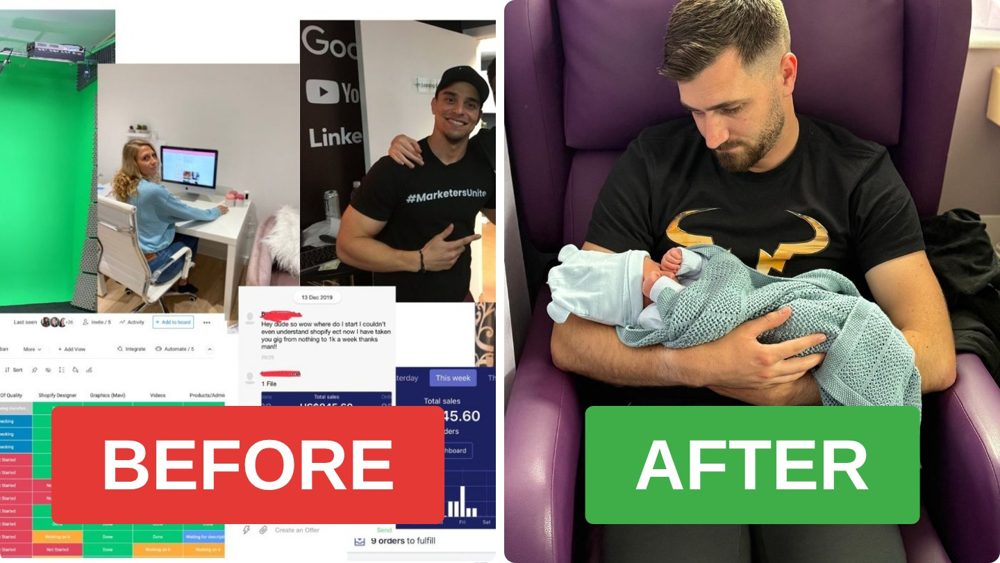
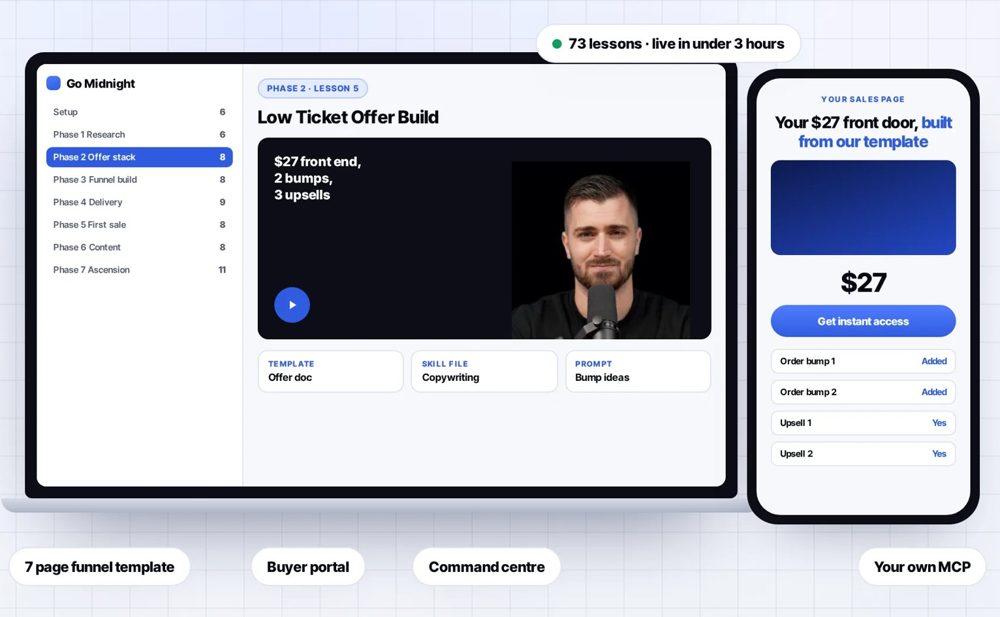
Want To Quit The Sales Call Grind? This Low-Stress $27 Front Door Is Helping Coaches Sell High Ticket
Gregory Cooke went from a bedroom eBay business to a burnt out 42 staff agency to selling $25K offers from a checkout link. Here's the $27 front door behind it.

Meta ads for experts: creative is the new targeting
The detailed audience settings that used to win campaigns matter less every year. What you put in the ad now decides who sees it.

Order bumps explained: the small add-on that quietly pays for your ads
A single checkbox on your checkout page can change the economics of a low priced front end offer. Here is how to build one that buyers actually tick.
How I Went From Getting Ghosted By Half My Sales Calls To Buyers Asking For The High Ticket Offer
Gregory Cooke on the webinars, setters and no shows that nearly broke him, and the $27 front door that now sells his $10K to $25K offers.

Packaging what you know: how to turn one slice of your expertise into a small product
Your flagship offer solves the whole problem. A small product solves one piece of it, and that is precisely why people buy it.

How to price a coaching or consulting offer without guessing
Most experts pick a number that feels comfortable and hope. A better price comes from four inputs you can work out on a single sheet of paper.

Why More Coaches And Consultants Are Choosing A $27 Front Door Over Running A Sales Team
No setters, no closers, no chasing no shows. 5 reasons coaches and consultants are building a $27 front door instead of a sales team.

What a discovery call really costs you, with a worked example
The calendar invite looks free. Add up the time, the payroll and the work you did not do, and every unqualified call carries a price tag most owners never see.

WhatsApp follow up for coaches: etiquette, timing and what to actually send
WhatsApp is the most personal channel you can reach a prospect on, which is why getting it wrong costs more than a bad email.
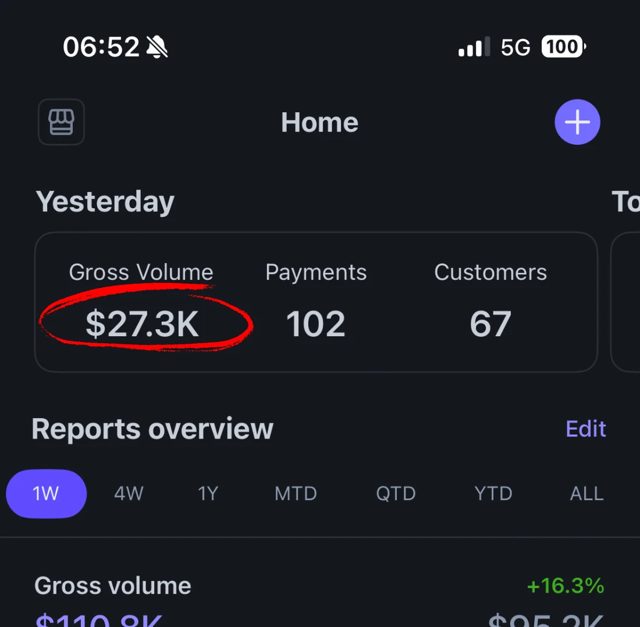
Why A $27 Front Door Is The Best Way To Sell High Ticket (Better Than Webinars)
Gregory Cooke used to run webinars at night praying more than eleven people turned up. Here are 7 reasons a $27 front door now beats the webinar for coaches and consultants.

Why your show rate is falling, and what actually lifts it
Empty calendar slots are rarely a lead problem. They are a promise problem, a timing problem and a follow-up problem, and each one is fixable this week.

The Hidden Leak That's The Real Reason Your Ads Stopped Working
Why more leads will never fix a funnel that asks strangers for $10K on a sales call, and the $27 front door that fixes it at the source.

5 Reasons Why Coaches And Consultants Are Switching To AI Employees
Cost per lead is up, show rates are down. Here's why experts are handing the work to 30+ AI employees and a $27 front door.
What If It Was Never About Your Close Rate?
Why experts lose high ticket deals to strangers, and the $27 front door that turns a stranger into a customer before the big ask.
I Tried 5 Ways To Sell My High Ticket Offer. Only One Didn't Cost Me Thousands
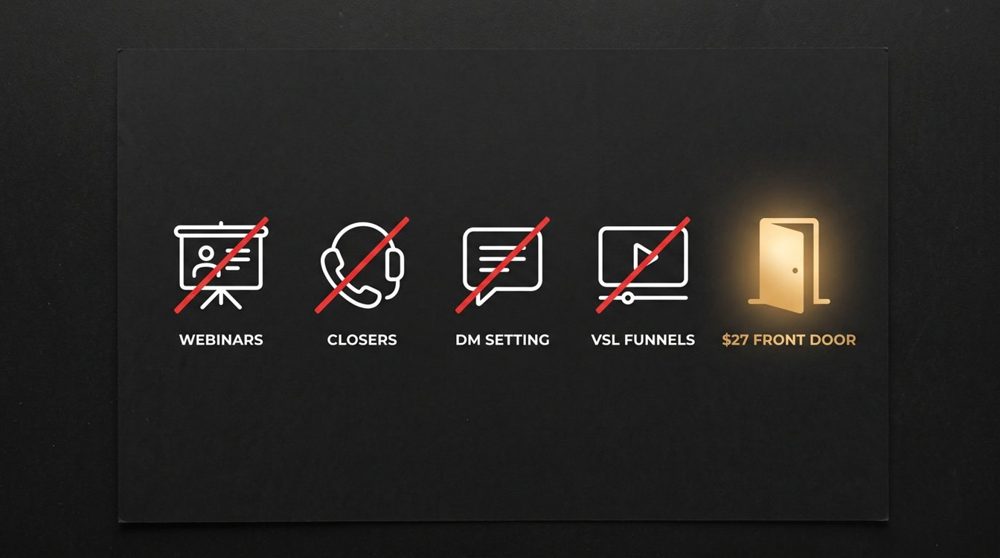
Gregory Cooke breaks down the real costs of webinars, setters and closers, DM setting, VSL to call funnels and the $27 front door, and why only one didn't burn him out.
Business Coaches Are Amazed: This $27 AI Funnel Sells High Ticket Without Sales Calls
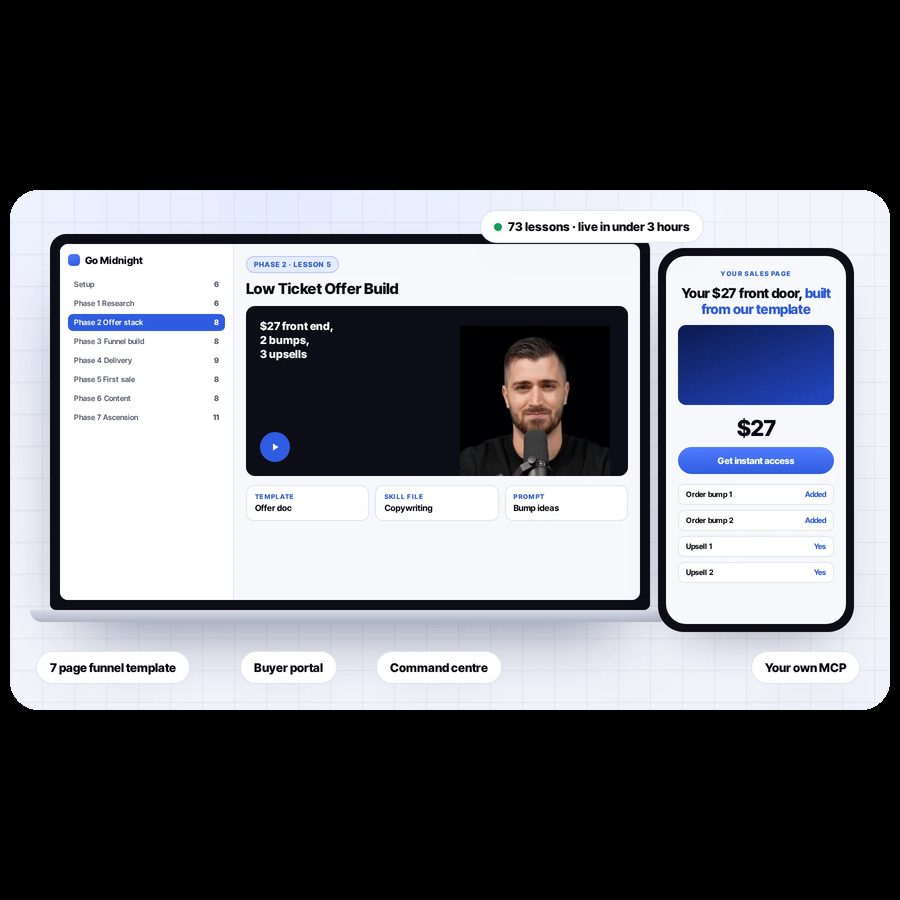
10 reasons experts are swapping discovery calls for a $27 front door run by 30+ AI employees.
Most read
- Top 5 Ways Coaches And Consultants Are Scaling To $100K Profit Per Month: Tested And Ranked
- Want To Quit The Sales Call Grind? This Low-Stress $27 Front Door Is Helping Coaches Sell High Ticket
- Daily email still sells high ticket. Here is how experts write emails buyers actually read
- The founder's calendar: how to protect deep work when you sell on calls
- How I Went From Getting Ghosted By Half My Sales Calls To Buyers Asking For The High Ticket Offer
Sales

Which offers still need a sales call, and which ones don't
Not every offer deserves a calendar slot. A simple way to decide whether your next sale should happen on a call, on a page or somewhere in between.

Application forms that filter: the five questions worth asking before a call
A calendar link with no questions fills your diary with the wrong people. Five well chosen application questions protect your closer's time without scaring off the buyers you actually want.

Why every expert should listen back to their own sales calls
Most experts who sell on calls have never heard themselves do it. One hour a week with your own recordings shows where deals are really won and lost.

What to do after a prospect says no: a follow up plan that respects them
Most experts either drop a prospect the moment they hear no or chase them until they get blocked. There is a calmer middle path that keeps the door open and your reputation intact.

"It's too expensive" is rarely about price. Here is what buyers usually mean
When a prospect says the price is too high, they are usually telling you something else. Here is how to work out which thing it is, and what to say back.

The setter handoff: where most high ticket deals quietly die
The setter warms the prospect up, the closer meets a stranger. The short gap between those two calls is where good deals go cold, and it is one of the cheapest things to fix.

Your buyers would rather not talk to you. Here's what to do about it
Gartner found most B2B buyers prefer a rep free experience, but the same research shows why the sales call is not dead, it just has a new job.
WhatsApp follow up for coaches: etiquette, timing and what to actually send
WhatsApp is the most personal channel you can reach a prospect on, which is why getting it wrong costs more than a bad email.
Why your show rate is falling, and what actually lifts it
Empty calendar slots are rarely a lead problem. They are a promise problem, a timing problem and a follow-up problem, and each one is fixable this week.
Marketing

What belongs above the fold on an expert's landing page
The first screen of a landing page does most of the selling, or most of the losing. Here is what earns a place there, and what should move further down.

How to turn one client result into a month of marketing
Most experts post a client win once and move on. With a little structure, a single result can feed four weeks of posts, emails and ads without repeating itself.

Your email list is smaller than you think. How to clean it, and why it lifts sales
A list of 20,000 that only 4,000 people read is not a list of 20,000. Clearing out the dead weight protects your inbox placement and makes every send easier to judge.

Retargeting for coaches: the cheapest audience you already paid for
Every person who watched your video, visited your page or started your application cost you money to reach. Retargeting is how you stop paying to meet them twice.

Organic content that sells: why fewer, better posts beat posting every day
Daily posting feels productive, but for experts selling high value offers, three considered posts a week usually do more of the selling. Here is how to plan them.

The first three seconds: how experts are writing ad hooks that stop the scroll
Most expert ads lose the viewer before the useful part begins. Here are the hook patterns that suit coaches and consultants, how to write twenty of them, and how to test them cheaply.

Cost per lead is the wrong number. Here is the one that decides if your ads work
A cheap lead that never buys is the most expensive thing in your ad account. Judge your campaigns on what each sale costs and what each lead is worth instead.
Daily email still sells high ticket. Here is how experts write emails buyers actually read
Sending every day sounds like a fast route to the spam folder. Done well, it is the most reliable way to keep a $10,000 offer in front of the people who will eventually buy it.
Meta ads for experts: creative is the new targeting
The detailed audience settings that used to win campaigns matter less every year. What you put in the ad now decides who sees it.
AI

The AI tools audit: cutting the subscriptions you don't use
Small AI subscriptions add up quietly. A one afternoon audit to find what you pay for, what you actually use and what can go this month.

Prompting for business owners: a plain English guide
You do not need a course or a cheat sheet to get useful work out of an AI assistant. You need to brief it the way you would brief a capable new hire.

AI support for course creators: answering students at 2am
Students get stuck at all hours, and most of their questions have been answered before. An AI assistant built on your own material can handle the routine ones, if you set it up with care.

One video, twenty posts: repurposing content with AI without sounding like a robot
AI can turn a single recording into a month of posts in an afternoon. The catch is that most of it reads like nobody wrote it. Here is a workflow that keeps your voice in.

AI call notes: the small habit that improves every sales conversation
Recording and summarizing sales calls with AI takes minutes to set up. Used well, it sharpens your follow up, your coaching and your marketing at the same time.

AI in the DMs: what an AI sales assistant should and shouldn't say
AI assistants can now answer every Instagram and Messenger enquiry within seconds. That speed helps, but only if the assistant knows what it may say, what it must never say and when to pass to a human.

AI employees for a service business: what they can do today, and what they still can't
The useful version of an AI hire is narrower and more boring than the demos suggest, which is exactly why it works.
5 Reasons Why Coaches And Consultants Are Switching To AI Employees
Cost per lead is up, show rates are down. Here's why experts are handing the work to 30+ AI employees and a $27 front door.
Business Coaches Are Amazed: This $27 AI Funnel Sells High Ticket Without Sales Calls
10 reasons experts are swapping discovery calls for a $27 front door run by 30+ AI employees.
Founders

Founder led content: why your face still sells better than your logo
Buyers of expert services are buying a person's judgement. Here is why content from the founder tends to outsell content from the brand, and how to make it without it taking over your week.

SOPs for a team of three: what to write down first
Small teams do not need a binder of procedures. They need the handful of tasks that break when one person is off, written down clearly enough for someone else to follow.

Why saying no to custom work grows a service business
Every bespoke project feels like a win when the invoice lands. Over a year, the custom requests you accept can quietly cap how many clients you serve and how much you keep per hour.

The 30 minute weekly numbers review every expert business needs
Most founders of expert businesses look at revenue and their bank balance and call it a review. A short, fixed weekly routine with a dozen numbers will tell you far more, far sooner.

When the founder is the bottleneck: signs you are taking too many calls
Taking every sales call yourself feels safe until it caps the business. Here are the warning signs, the maths behind them and a staged way to hand calls over.

Hiring your first assistant: what to hand over first
The first hire often disappoints, not because the person is wrong but because the founder hands over the wrong work. Here is how to choose what goes first, and what to keep.
The founder's calendar: how to protect deep work when you sell on calls
If you are both the closer and the person building the business, your calendar is a fight between two jobs. Here is how to stop losing it.
Want To Quit The Sales Call Grind? This Low-Stress $27 Front Door Is Helping Coaches Sell High Ticket
Gregory Cooke went from a bedroom eBay business to a burnt out 42 staff agency to selling $25K offers from a checkout link. Here's the $27 front door behind it.
Money

Margins in a small agency: where the money really goes
Plenty of small agencies bill well and still keep surprisingly little. A worked example of where the money leaks, and the handful of numbers worth checking every month.

Break even on ad spend: the simple maths behind self liquidating offers
A low priced offer that pays back its own ad costs lets you build a list of buyers at little or no net cost. Here is how to check whether the numbers work for yours.

Payment plans for high ticket offers: when they help and when they hurt
Splitting a $6,000 offer into instalments can bring in good buyers who would otherwise walk away. Set up badly, it also brings missed payments, weekly chasing and money you counted but never collect.

Refunds and guarantees: what a strong guarantee really costs you
A bold guarantee can help a high ticket offer close more often, but refunds cost more than the price of the programme. Here is how to do the maths before you promise anything.

Lifetime value for coaches: how to work it out on one page
Most coaches know what a client pays up front, but not what a client is worth over time. A one page calculation changes how much you can afford to spend winning one.

Average order value: the number that lets you outspend your competitors
Two experts can pay the same for a booked call and end up in very different places. The difference is usually how much each sale is worth, and that number can be changed.
What a discovery call really costs you, with a worked example
The calendar invite looks free. Add up the time, the payroll and the work you did not do, and every unqualified call carries a price tag most owners never see.
I Tried 5 Ways To Sell My High Ticket Offer. Only One Didn't Cost Me Thousands
Gregory Cooke breaks down the real costs of webinars, setters and closers, DM setting, VSL to call funnels and the $27 front door, and why only one didn't burn him out.
Offers

Monthly memberships for experts: when continuity works and when it churns
A monthly membership looks like the answer to lumpy revenue. Whether it holds members or leaks them comes down to a few design choices made before launch.

Productised services: how to sell consulting like a product
Custom consulting is hard to price, hard to sell and hard to hand off. Packaging it as a fixed product with a fixed scope and a fixed price fixes all three.

Bonuses that actually move buyers, and the ones nobody wants
A stack of extras with a made-up total value rarely persuades anyone. The bonuses that work answer a specific objection or speed up a specific result.

Free lead magnet or paid low ticket product? What changes when people pay
A free guide brings in more names. A small paid product brings in fewer people who behave very differently. Here is how to decide which belongs at the front of your funnel.

Naming your offer: why the title does half the selling
A good offer name tells the buyer who it is for and what changes. A vague one makes every sales call work harder. Here is how to choose and test yours.

Upsells that feel helpful, not pushy
A good upsell solves the next problem the buyer is about to hit. A bad one feels like a toll booth. Here is how to tell the difference, and how to word and time the offer.
Order bumps explained: the small add-on that quietly pays for your ads
A single checkbox on your checkout page can change the economics of a low priced front end offer. Here is how to build one that buyers actually tick.
Packaging what you know: how to turn one slice of your expertise into a small product
Your flagship offer solves the whole problem. A small product solves one piece of it, and that is precisely why people buy it.
How to price a coaching or consulting offer without guessing
Most experts pick a number that feels comfortable and hope. A better price comes from four inputs you can work out on a single sheet of paper.