One video, twenty posts: repurposing content with AI without sounding like a robot
AI can turn a single recording into a month of posts in an afternoon. The catch is that most of it reads like nobody wrote it. Here is a workflow that keeps your voice in.
· 5 min read
Why most AI repurposing falls flat
The promise is simple. Record one video, feed it to an AI tool and get a month of posts back.
The result is often a stack of content that is technically accurate and completely forgettable. Every post opens with a question, every list has exactly three points and the same handful of stock phrases turn up again and again.
The problem is not the tool. It is the workflow. Most people ask AI to write about their video, when they should be asking it to find the best bits of what they already said.
Start with the transcript, not the prompt
Your recording is the valuable part. It contains your stories, your opinions, your phrasing and the odd sharp line you said without thinking.
So the first step is to get an accurate transcript. Most recording and editing tools now produce one automatically, and they are good enough to work from.
Then, before you ask for any posts, ask the AI to do something more modest: pull out the material.
Sample prompt: "From this transcript, list every distinct idea, story, opinion and example I give. Quote my exact words for each one. Do not rewrite anything."
That list becomes your raw stock. Everything you publish should trace back to something on it.
A map for twenty posts
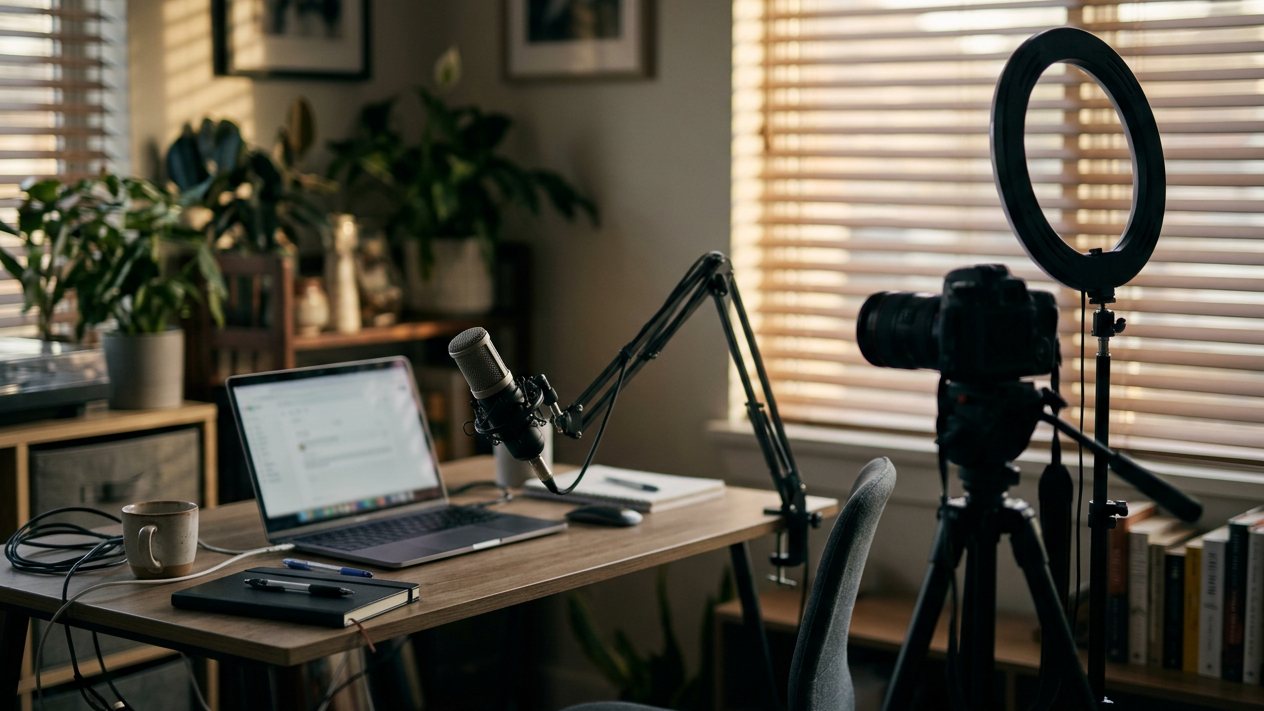
Say you record a 30 minute talk to camera, or a Q and A with a client. That is usually enough material for twenty pieces if you plan the formats up front.
- 5 short video clips of 30 to 60 seconds, each built around one idea or story.
- 4 text posts for LinkedIn or Facebook, each expanding one opinion from the video.
- 3 quote graphics using lines you actually said.
- 2 carousels that turn a process or list from the video into slides.
- 2 stories or short behind the scenes posts pointing people to the full video.
- 2 emails to your list, one teaching and one story led.
- 1 long post or article that turns the whole talk into a written piece.
- 1 FAQ post answering the questions that came up.
That is twenty. Spread across four weeks, it is five a week from a single recording session.
AI should be the editor who finds your best lines, not the ghostwriter who invents new ones.
Prompts that keep your voice
Once you have the raw stock, you can ask for drafts. The trick is constraint. The more specific the instruction, the less generic the output.
A few rules that make a large difference:
- Feed it examples. Paste three or four posts you wrote yourself that performed well, and tell the tool to match their length, rhythm and tone.
- Ban the tells. Give it a list of words and patterns to avoid, including the stock phrases you see everywhere and any opener that starts with a rhetorical question.
- Insist on quotes. Ask it to use your exact sentences from the transcript wherever possible, and to mark anything it added.
- One idea per piece. Never ask for a post that covers the whole video. Give it one item from your stock list at a time.
Sample prompt: "Using only idea 4 from the list above, write a LinkedIn post of around 150 words, opening with the story exactly as I told it and keeping my wording. Match the style of the example posts, with no question in the first line."
The ten minute edit pass
Every draft needs a human pass before it goes out. This is where most people skip, and where most of the robot feel comes from.
Run each piece through a short checklist:
- Would I actually say this sentence out loud? If not, rewrite it or cut it.
- Is there one specific detail, a number, a name of a tool, a real situation, that only I would include?
- Does the first line say something, or does it just warm up?
- Have I cut every sentence that summarises what I just said?
- Does it end with a useful next step rather than a generic call to engage?
Reading each draft aloud is the fastest test there is. Your ear will catch the phrases your eye skims past.
Ten minutes a piece is realistic once you are practised. Twenty pieces at ten minutes each is a little over three hours of editing.
The real time saving
Done this way, the time adds up roughly like this: an hour to plan and record, half an hour to extract the stock, an hour to generate drafts and around three hours to edit.
That is a working day for a month of content that sounds like you. Compared with writing twenty posts from a blank page, it is a real saving.
And because everything comes from one recording, your message stays consistent. Your audience hears the same ideas from several angles, which is usually what it takes for an idea to stick.
One warning before you start: do not let the volume tempt you into publishing everything at once. Twenty posts in a week from one video will feel repetitive to anyone who follows you closely.
Space them out, mix them with fresh material and keep an eye on which formats your audience responds to. Next month, record a second video on the idea that drew the most replies.